![[NEW] Tony Levin [2026]](images/exclusive/interviews/INT-TonyLevin3.jpg) [NEW] Tony Levin [2026]
[NEW] Tony Levin [2026]
Uncle Funkster: Beyond the Bass
Over the past half century, Tony Levin has been a prolific session player and one of the most active live performers on the planet. He’s contributed his talents to over five hundred albums amongst which include 15 with Peter Gabriel and 18 with King Crimson (counting live, studio, and compilations) alongside contributions to the work of John Lennon, Alice Cooper, Lou Reed, Herbie Mann, Paul Simon and many others. On tour, he’s traveled the World many times over with the aforementioned King Crimson, Peter Gabriel, and several of his own bands including Stick Men.
This Fall, he’ll stage 65 performances in North America as a member of BEAT, celebrating King Crimson’s ‘80s repertoire alongside Adrian Belew, Steve Vai and Danny Carey interpreting “Discipline, Beat and Three of a Perfect Pair.”
Levin’s seventh solo album, and his first since 2007, is entitled Bringing It Down to the Bass and is an autobiography of sorts, with the themes drawn from Levin’s musical life. It features a myriad of collaborators from his half-century-plus on the road and in the studio with Peter Gabriel, King Crimson and many, many others.
Features a Murderer’s Row of guest musicians including Robert Fripp, Vinnie Colaiuta, Earl Slick, Mike Portnoy, Steve Gadd, Jerry Marotta, Gary Husband, L. Shankar, Pete Levin, Jeremy Stacey, David Torn, Pat Mastelotto, Larry Fast, Steve Hunter, Manu Katche, Alex Foster, Dominic Miller, Markus Reuter, Collin Gatwood, Chris Pasin, Jay Collins, Josh Shpak, Don Mikkelsen.
I sat down with Tony and we discussed everything from this new album, the musicians who played on it, on through to his brand new book, what some of the songs mean to him and, oh yeah, even penguins!
Being that Bringing It Down to the Bass is your seventh solo album, and yet your first in 18 years, aside from an abundance of side projects, what has been stopping you from getting to record an album like this sooner? - “Well, first of all, it wasn’t intentional to wait that long. I had the best of problems; too much good live playing and touring to have time to finish the album. So eventually I got to it, bit by bit, and had a wealth of my material to choose from.”
Indeed, what were some of the biggest obstacles along the way to bringing this album to fruition and how did you overcome them? - “Not a lot of obstacles, really. Just ‘get on it, Tony’ was my theme. I didn’t assemble a rhythm section to do the tracks, which would make it easier and quicker. On this album I wanted to give myself a treat and, on each piece, think of who I’d most like to play on it - then try to reach them to do it. So there was some waiting for players to come home off the road (or getting them to record while ON the road). But well worth it.”
As for the album, I understand that it is dutifully self-served tribute to vast parts of your career, sonically rich and diverse, and perfectly showcases your influence on modern and contemporary music, so can you please explain just why it was indeed created this way and how it felt to you personally to record the tracks with all the notable musicians you brought on board; within the context of how it came together, both thematically and musically - “Guess I already addressed my wanting each track to have the players I’d most want to hear playing it. As to writing the material, it went through a long period - lots of pieces written, and as I started honing them down, the theme that appealed most to me was to feature different basses and bass techniques on each track, and also, for the booklet, to take photo portraits of each of the basses, not in the studio but out, in my imagination, in the world, doing what they’d like outside of making music. (Weird, I know, but… well, I’ve been playing basses most of my life, so focusing on our relationship isn’t so far fetched).”
Indeed, a lot of words and terms will be used to describe your music on this album, but how would you yourself sum up your sound on it ... and in just five (5) words? - “Super players enlivening Tony’s music.”
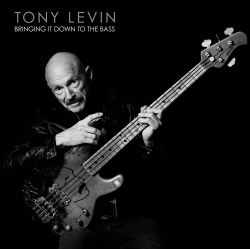
And do please tell us more about the quietly stoic, yet gainfully artistic look to the album cover, why you chose that particular image, and what you were thinking at the time? - “We took a lot of photos for possible use on the cover. Actually settled on a different one, a composite of me playing the upright and a statue that my father sculpted when I was young, of a bass player on the upright … but it implied jazz, so we switched to just a portrait of me with electric bass. Either way, the theme, to me, was that it’s about the bass.”
Please tell us (in a couple of sentences or less) a little more about what these tracks noted below mean to you and how they came to be:
Uncle Funkster - “Wanted to do a duo with the great drummer Vinnie Colaiuta - maybe on the Chapman Stick rather than bass. Didn’t have the schedule to get together for it, so I laid down my ideas, he played to that, then I re-played to him.”
Espressoville - “Writing the piece came first. Then decided to start and end it with the sound of my espresso machine (Breville) grinding out a coffee. Then I looped that, made it a bit percussive, but kept it somewhat in the background as I knew Steve Gadd’s drum part should be the main percussion element. For the horn parts, I’d just toured (with Peter Gabriel) with Josh Shpak playing trumpet, and loved his playing, so I had him record the lead part first, then had some of our great local players come into the studio to overdub, phrasing with Josh. Guitar, I chose my old friend Joe Caro, to give it the guitar groove it needed.”
Bungle Bass - “When I want to step outside the norm, one option is to have my friend David Torn play guitar on the track, in his utterly unique way.”
And was Bringing It Down to the Bass always going to be the albums name or was there another that nearly won the race come the time to take your hands off the project? - “I have a habit of going through multiple titles for most pieces I write - albums too. This was no exception. The album had no title, but there was a song called “Bringing It Down to the Bass”… with lyrics that extolled some of my bass heroes. That song didn’t make it onto the album, ironically, among a few others. But there was a piece called “Laid Back Lee”, an instrumental that in a few sections broke down to just the bass starting a new groove. So I re-titled that piece, and because I like it a lot, I chose for it to be the opening piece, and the title piece, of the album.”
Being that the album features an incredible smorgasbord of recording talent, such as Fripp, Husband, Gadd, Shankar, Marotta, Mastelotto, and such, when you were in the early stages of writing the songs did you have each musician in mind to play on each track? And if so, was there an occasion where you couldn’t get one and had to bring someone else in, perhaps? - “In most cases, having written the piece, I thought, who’s my dream player on this particular piece. I think it’s more practical and more cohesive to have somewhat the same rhythm section on the whole album, but on this one I decided overall to break from some of my usual rules.”
Noted as an album that features the aforementioned myriad of collaborators drawn from your half century plus on the road and in the studio with Peter Gabriel, King Crimson and so forth, with musical themes drawn from your life on this recording, was there ever a section of it that you tried to work a track out of, but was just too personal to cultivate and bring forth, perhaps? - “Nothing that comes to mind.”
When you play the bass live on stage, and especially during long moments of soloing, do you close your eyes, allowing your thoughts to drift away to anywhere in particular, your fingers on autopilot and your brain synched into them at all times, or do you have to be present and correct, eyes wide open at all times, fully concentrating when playing live? - “That’s a good subject, and frankly I hadn’t thought about it before. I think the mind goes into some different place when we play music, that’s not quite like any other activity. Maybe it’s that way for all players, or maybe just for me. I don’t usually have to ’think’ while I’m playing, I just let myself be immersed in the music. There are distractions, of course, on stage, and sometimes they win out for a few seconds, but largely, I’m just inside the music, not thinking or even planning what I’ll play.”
What are some of the last albums (CD, vinyl, cassette, et al) you physically purchased (vintage and/or new releases) and which one have you already gone back to listen to more and why? - “I typically don’t have as much time to listen as I’d like — pretty immersed in learning music for upcoming tours, and sometimes in writing new music. Last album I purchased was Miles Davis LP, In a Silent Way.”

You have also released a new book entitled The Book of BEAT, a collection of images culled from the BEAT supergroup tours of 2024 and 2025. Containing an amazing 188 photos across just 156 pages, were these all photos you had in your possession and just decided why not create a book for them or was it moreover a situation where they were proffered to you by various photographers and the idea percolated before coming to fruition? - “They’re my photos from our tours, both behind the scenes and on stage during the shows. I wasn’t happy with the first printing of the book, and am in the process of having it reprinted better - the new version of the book should be ready by early August (on my website).”
And with all that said, the red suit that we see you wearing front and center of the book cover, is that something that gets a regular run out at your shows or is it just for special occasions only? - “No, I have no red suit… that’s Adrian Belew!”
What is next for you? Are there plans for a quicker than expected new solo album? I mean, we’re not called Exclusive Magazine for nothing so if you have a delightful slice of exclusiveness with regard this question you can kindly and willingly proffer us that would be rather lovely! - “I’m on tour now, with BEAT, doing 31 shows in Europe. In August I’ll be part of our yearly Three of a Perfect Pair music camp, that Adrian Belew, Pat Mastelotto and I put on each year, for 12 years now. In September Stick Men will tour the west coast - those tour dates are just about to be announced. Also in September our new album, “Let’s Thrak Again” will come out, in many formats. In October thru December I have another tentative tour, but can’t announce it for another week or two.”
Now, and as we have spoken about off air, so to speak, your daughter Maggie is the executive producer of Black Phone 2, and your son-in-law Scott Derrickson is the writer/director, so what is it like having all this horror talk, maybe even images of cinematic horror possibilities to come in your house or being talked about during any given day of the week from them?! - “One of the amusing things about the horror film genre is, if you ask someone whether they like horror movies, it’s a binary answer, yes or no - if they like them they’re probably big fans. Or they can’t stand them. And that’s a bit similar to Prog Rock!”
And finally, we asked Tony to kindly provide a never-before-seen photograph of himself. One that perfectly personified his readiness for the world to hear his new musical endeavor and see him on tour. And kindly, this is what he sent.