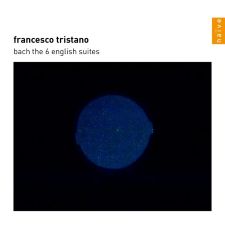
Title - Bach The 6 English Suites
Artist - Francesco Tristano
For those not in the know, The English Suites, BWV 806–811, are a set of six suites written by the German composer Johann Sebastian Bach for harpsichord (or clavichord) and generally thought to be the earliest of his 19 suites for keyboard (discounting several less well-known earlier suites), the others being the six French Suites (BWV 812–817), the six Partitas (BWV 825-830) and the Overture in the French style (BWV 831). They probably date from around 1713 or 1714 until 1720.
Francesco Tristano presents his latest 2CD extravaganza Bach The 6 English Suites to the world on May 23rd, 2025 via Naïve, a label of Believe Group, under Tristano’s imprint intothefuture.
This release features a refined and rhythmically engaging set of works that reflect the nuanced dialogue between dance and structure in Bach’s music, and which has already garnered a lot of well-deserved initial praise.
Johann Sebastian Bach (1685-1750)
CD 1:
1-10 English Suite No. 1 in A Major, BWV 806
11-17 English Suite No. 2 in A Minor, BWV 807
18-24 English Suite No. 3 in G Minor, BWV 808
CD 2:
1-7 English Suite No. 4 in F Major, BWV 809
8-14 English Suite No. 5 in E Minor, BWV 810
15-22 English Suite No. 6 in D Minor, BWV 811
Spread across 2 CDs, these 46 pieces that make up the infamous six suites for keyboard are thought to be the earliest set that Bach composed aside from several miscellaneous suites written when he was much younger. Bach’s English Suites display less affinity with Baroque English keyboard style than do the French Suites to French Baroque keyboard style.
It has also been suggested that the name is a tribute to Charles Dieupart, whose fame was greatest in England, and on whose Six Suittes de clavessin Bach’s English Suites were in part based.
Indeed, surface characteristics of the English Suites strongly resemble those of Bach’s French Suites and Partitas, particularly in the sequential dance-movement structural organization and treatment of ornamentation. These suites also resemble the Baroque French keyboard suite typified by the generation of composers including Jean-Henri d’Anglebert, and the dance-suite tradition of French lutenists that preceded it.
In the English Suites especially, Bach’s affinity with French lute music is demonstrated by his inclusion of a prelude for each suite, departing from an earlier tradition of German derivations of French suite (those of Johann Jakob Froberger and Georg Boehm are examples), which saw a relatively strict progression of the dance movements (Allemande, Courante, Sarabande and Gigue) and which did not typically feature a Prelude. Unlike the unmeasured preludes of French lute or keyboard style, however, Bach’s preludes in the English Suites are composed in strict meter.
www.francescotristano.com
Francesco Tristano @ Facebook











 Title - Bach The 6 English Suites